
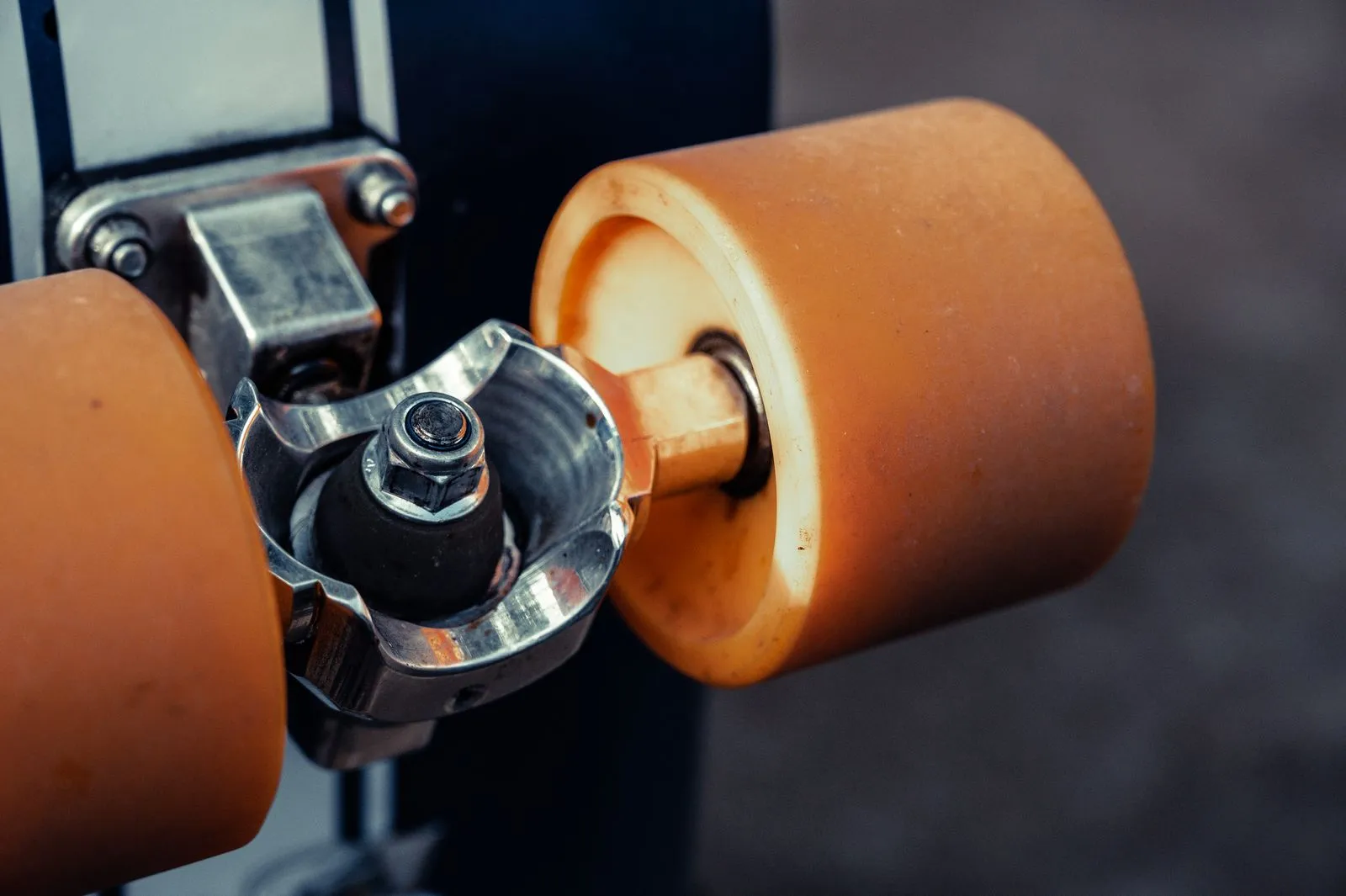
Tucson’s dry air, blowing dust, and strong sun can affect a cruiser board over time. Grit may work into the bearings, heat can stress components left in a parked car, and loose hardware can make a ride feel unstable. A quick inspection after dusty rides and sensible storage between outings help catch small problems early. Use this practical routine to check your wheels, bearings, and hardware, then keep your board ready for the next trip.
Check Wheels for Wear
Turn each wheel by hand and look for flat spots, cracks, chunks missing from the urethane, or uneven wear. A wheel that wobbles noticeably may have a damaged core or may not be seated correctly. Check that all four wheels still have enough material and a similar profile. If one wheel looks substantially more worn, inspect the others before deciding whether to replace a single wheel or a full set.
Spin the wheels and listen for rubbing or scraping. Some sound can come from dust, but a wheel that catches or stops abruptly deserves a closer look. Check the gap between each wheel and the deck or truck; the wheel should turn without rubbing. If you adjust the axle nut, tighten it only enough to remove excess side-to-side movement while allowing the wheel to spin freely.
Keep Bearings Clean and Dry
Dust can build up around bearing shields and slow a wheel’s spin. After a ride on a dusty path, wipe the outside of each wheel and bearing area with a clean, dry cloth. Avoid spraying water or household cleaner directly onto the bearings. Moisture and residue can carry grit inside or interfere with the lubricant.
If a wheel spins roughly, feels gritty, or makes a persistent clicking sound, remove it and inspect the bearing. Follow the bearing maker’s cleaning and lubrication directions; use a product intended for skateboard bearings and apply only the recommended amount. Replace a bearing if it remains rough or damaged after proper cleaning. Don’t judge bearing condition by spin time alone: a smooth, quiet roll matters more than a long, unloaded spin.
Inspect Trucks and Hardware
Before riding, check the bolts that attach the trucks to the deck and the axle nuts that hold the wheels. Look for missing parts, visible rust, damaged threads, or bolts that have backed out. Use the correct skate tool or wrench and tighten loose hardware securely, but don’t force a bolt or overtighten it. Excess pressure can damage the deck or make later adjustments difficult.
Check the trucks for cracks, bends, or unusual movement, and make sure the bushings are not split or badly compressed. Press the board from side to side while it rests on the ground; the trucks should turn and return without sticking. If you find a cracked truck, stripped thread, or hardware that will not stay secure, pause your rides until you repair or replace the affected part.
Store It Away From Heat and Dust
Keep your board indoors in a cool, shaded, dry spot. Avoid leaving it in a parked car, near a window with direct sun, or beside a heat source. High temperatures can affect the deck, wheels, and soft components, while repeated sunlight can fade or weaken exposed materials. Store the board flat or upright where it cannot fall, and don’t stack heavy items on top of it.
A simple cover or clean storage area helps limit dust settling on the board between rides. Before putting it away, brush or wipe off loose grit and let damp parts dry fully. Check the board more often during dusty conditions or after it has been stored for a while. Desert Glide in Tucson can help you identify worn parts if a component looks damaged or you are unsure what needs attention.
A few minutes of routine care can help you spot wheel wear, gritty bearings, loose hardware, and heat-related storage risks before they interrupt a ride. Wipe away dust, check that everything moves and fastens as it should, and keep the board out of direct sun and parked cars. If you find damage you can’t safely address, ask a local cruiser board shop for help.